The racist policies of the past have concentrated vacant, abandoned, and deteriorating property in Tampa’s low-income, Black, and vulnerable neighborhoods. These communities have suffered harms associated with these properties for a very long time. Let’s dive into the history of how we got here, and how failing to adequately manage these this issue has created a city-wide impact.
Where We Started – Political Exclusion, Jim Crow, and Segregation
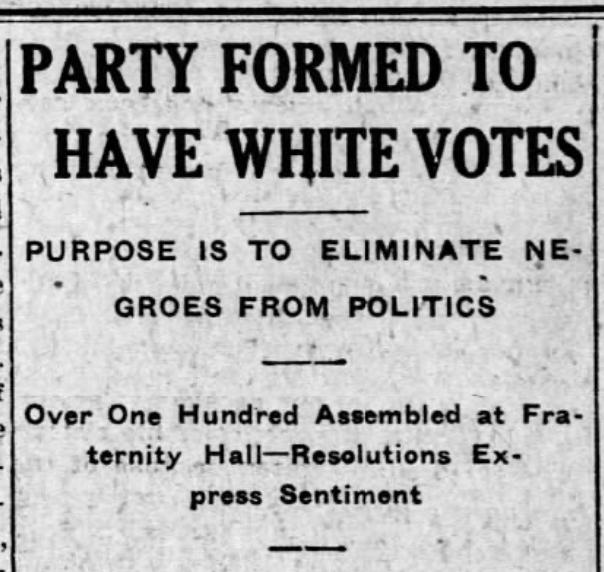
Source: “White Municipal Party formed” Newspapers.com, The Tampa Tribune, July 24, 1908, https://www.newspapers.com/article/the-tampa-tribune-white-municipal-party/153006927/ 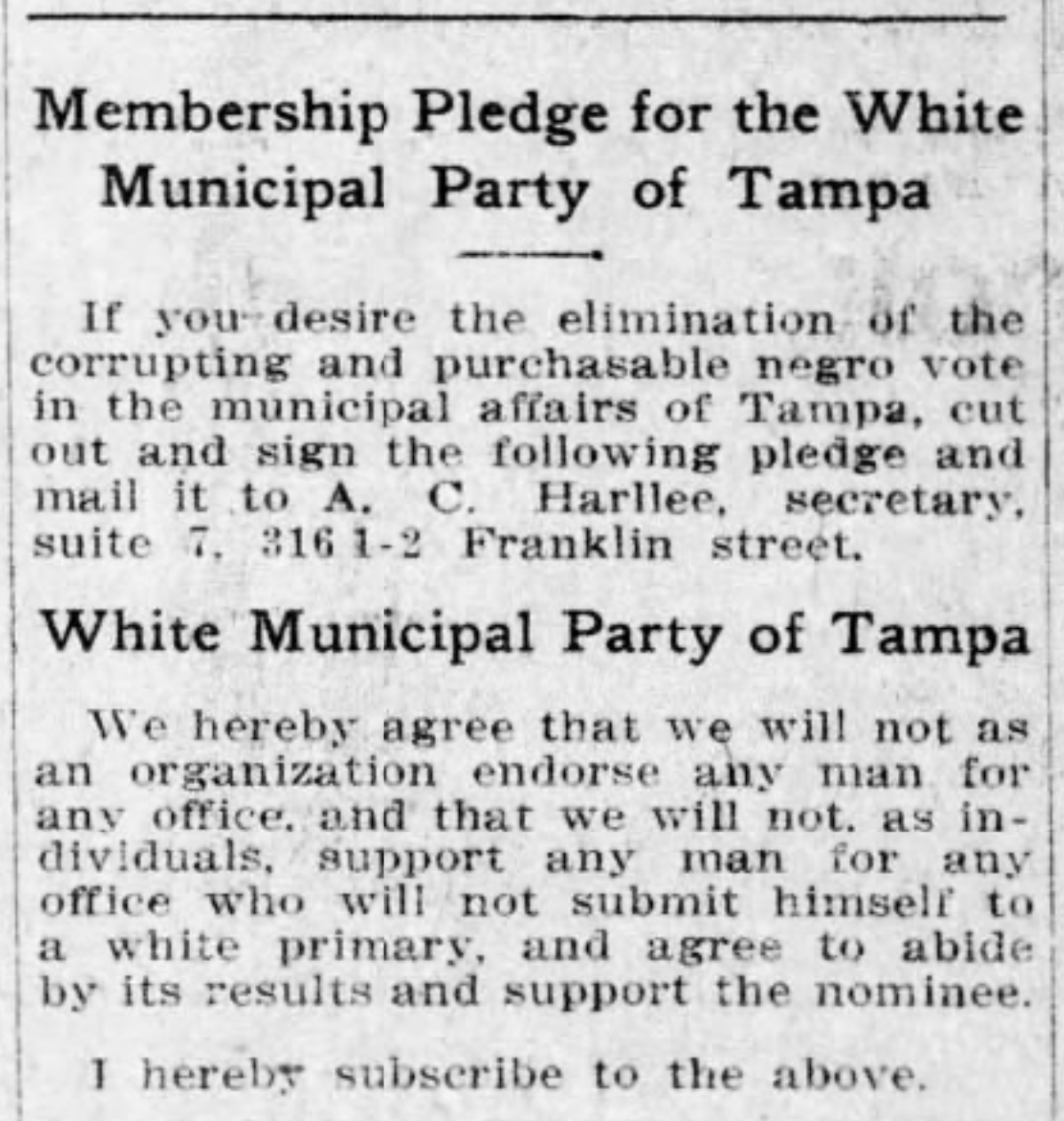
Source: “White Municipal Party pledge” Newspapers.com, The Tampa Tribune, January 29, 1910, https://www.newspapers.com/article/the-tampa-tribune-white-municipal-party/153007107/
Tampa was not immune from the moral corruption of racial prejudice that pervaded the South after the Civil War. Tampa’s white elite secured the exclusion of Black residents from political participation during the Jim Crow era with the organization of the White Municipal Party. Long barred from affecting political change and segregated into neighborhoods with substandard housing, facilities, and amenities, the echoes of this shameful past reverberate through the decades to the present day and set the backdrop for Tampa’s current problem.
City Planning, Redlining, Highways, and More
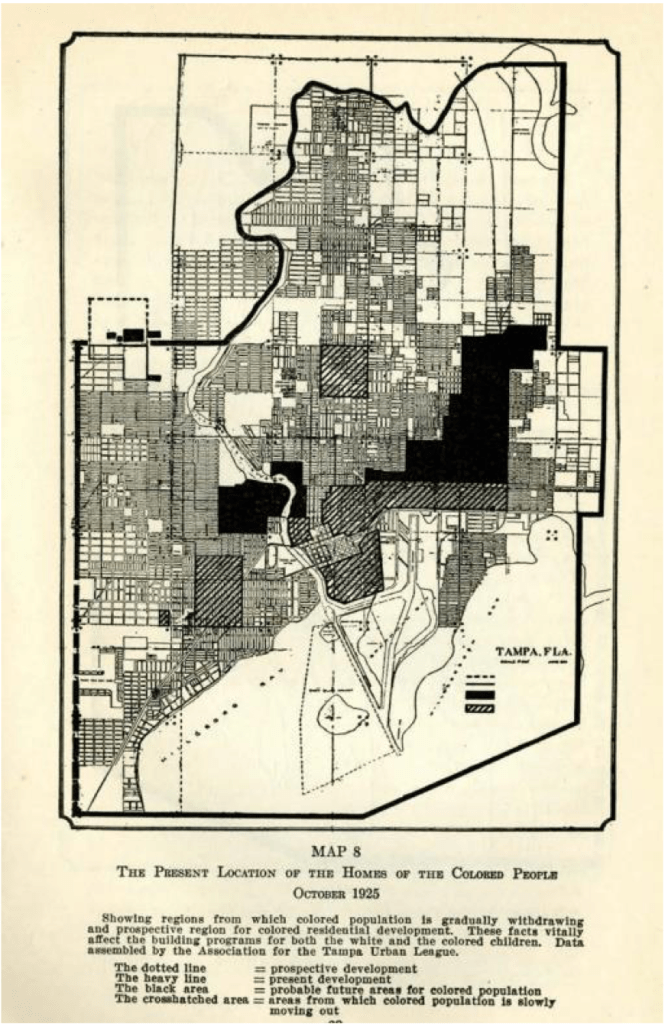
Source: Plan Hillsborough Nondiscrimination and Equity Plan (2021). Figure 41 – 1925 Map of “The Homes of the Colored People” 
Source: Mapping inequality. Digital Scholarship Lab. (n.d.). https://dsl.richmond.edu/panorama/redlining/map/FL/Tampa/areas#loc=12/27.9416/-82.4721 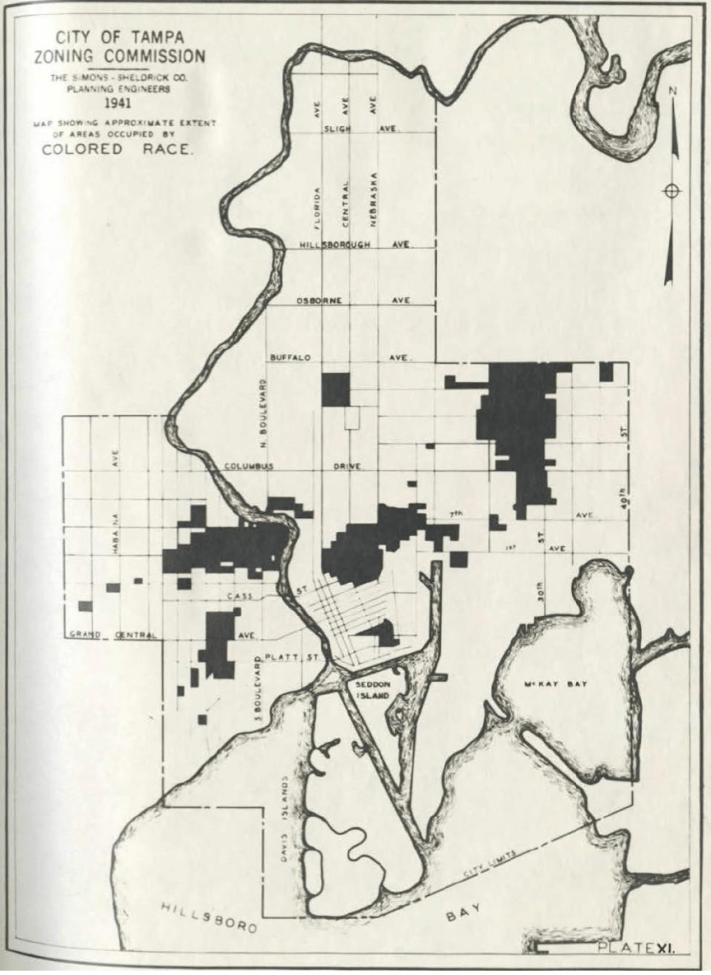
Source: Plan Hillsborough Nondiscrimination and Equity Plan (2021). Figure 44 – Map of the “Colored Race” from 1941 City of Tampa Master Zoning Plan 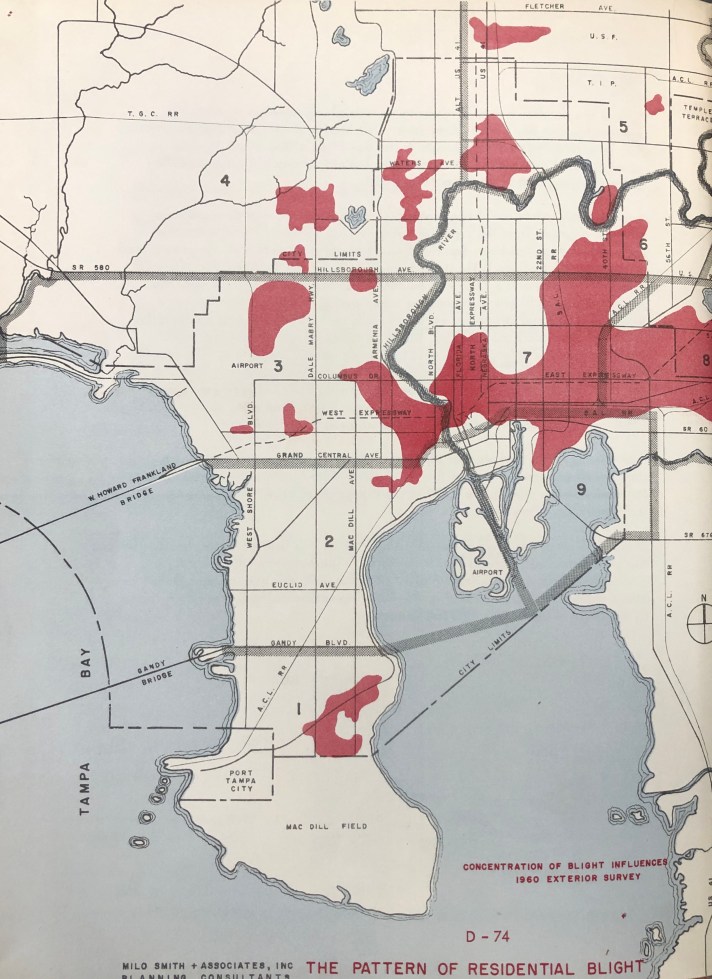
Source: Milo Smith & Associates. A Planning Report for Tampa, Florida, 1961. M. Smith, 1961. 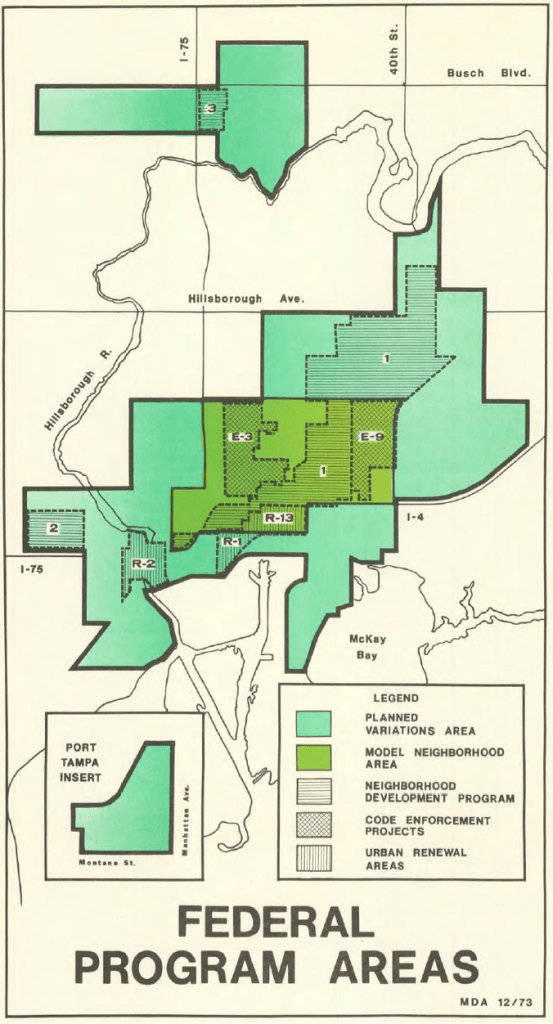
Source: Plan Hillsborough Nondiscrimination and Equity Plan (2021). Figure 62 – Map of Federal Program Areas (1973)
As early as the 1920’s, city planners posited emerging Black neighborhoods in what are today called East Tampa and West Tampa, while the historic Black neighborhoods of Dobyville and the Scrub have since been dismantled. Sulphur Springs, which experienced a later demographic shift, appears in maps showing blight from the 1960’s. From segregation, to redlining, to the destructive imposition of interstate highways, the repeated undermining of Tampa’s Black neighborhoods precipitated the present vulnerabilities.
Demographics: Late-20th Century to Present
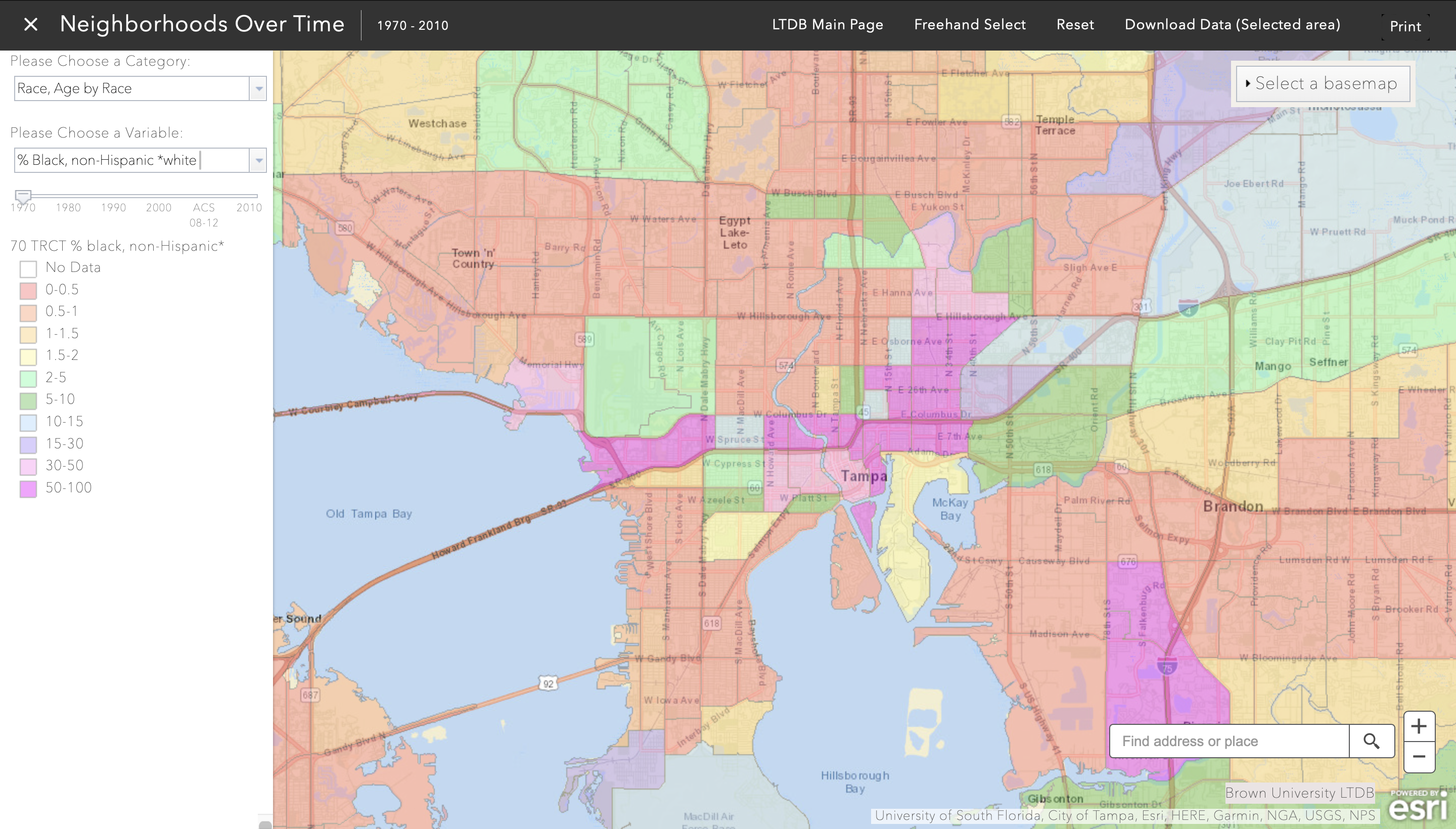
“The Longitudinal Tract Data Base (LTDB).” S4 Arcgis Map Web App Template, s4.ad.brown.edu/WebGISnew/webgisLTDB/. Accessed 25 Feb. 2025. 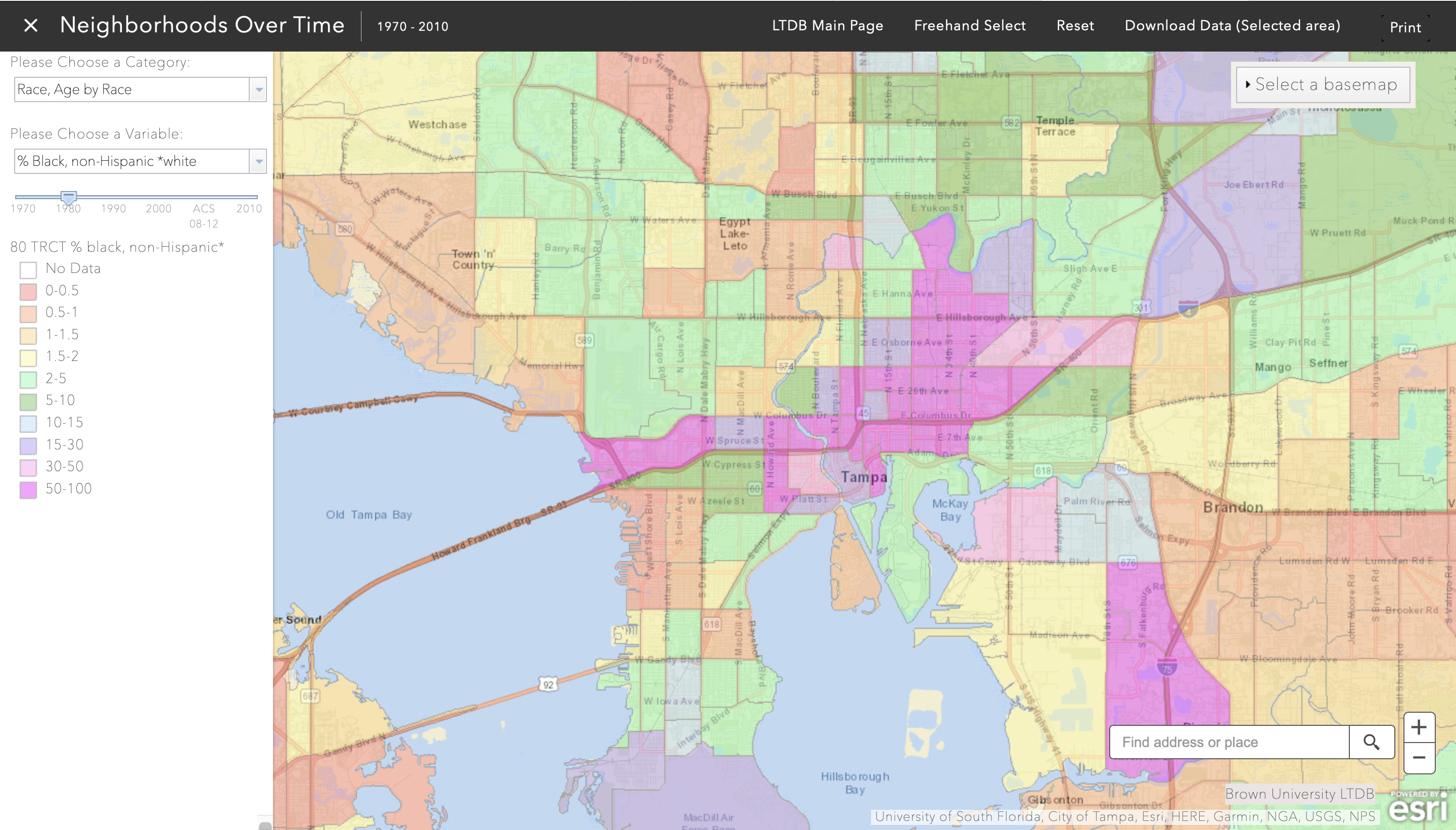
“The Longitudinal Tract Data Base (LTDB).” S4 Arcgis Map Web App Template, s4.ad.brown.edu/WebGISnew/webgisLTDB/. Accessed 25 Feb. 2025. 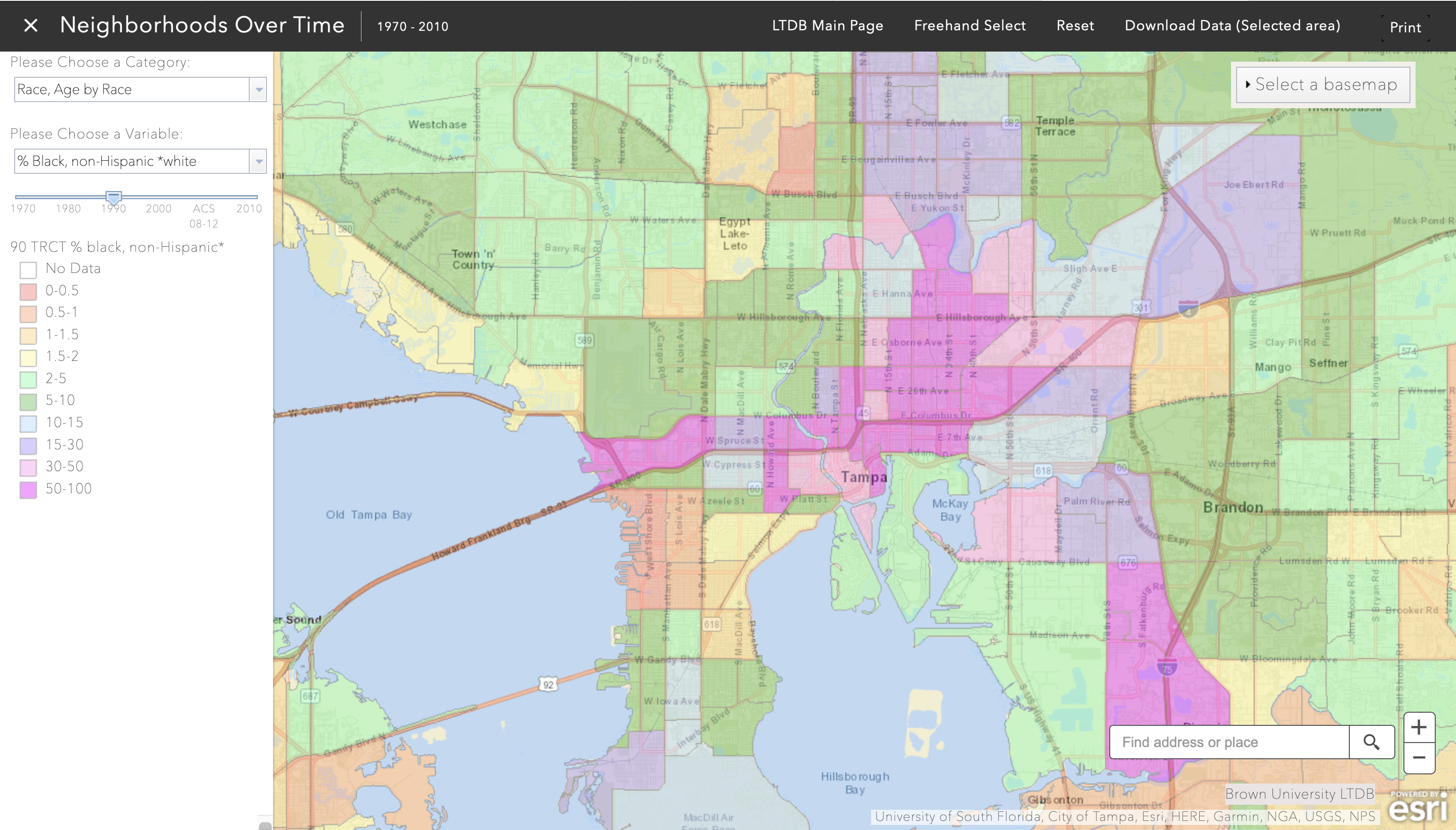
“The Longitudinal Tract Data Base (LTDB).” S4 Arcgis Map Web App Template, s4.ad.brown.edu/WebGISnew/webgisLTDB/. Accessed 25 Feb. 2025. 
“The Longitudinal Tract Data Base (LTDB).” S4 Arcgis Map Web App Template, s4.ad.brown.edu/WebGISnew/webgisLTDB/. Accessed 25 Feb. 2025. 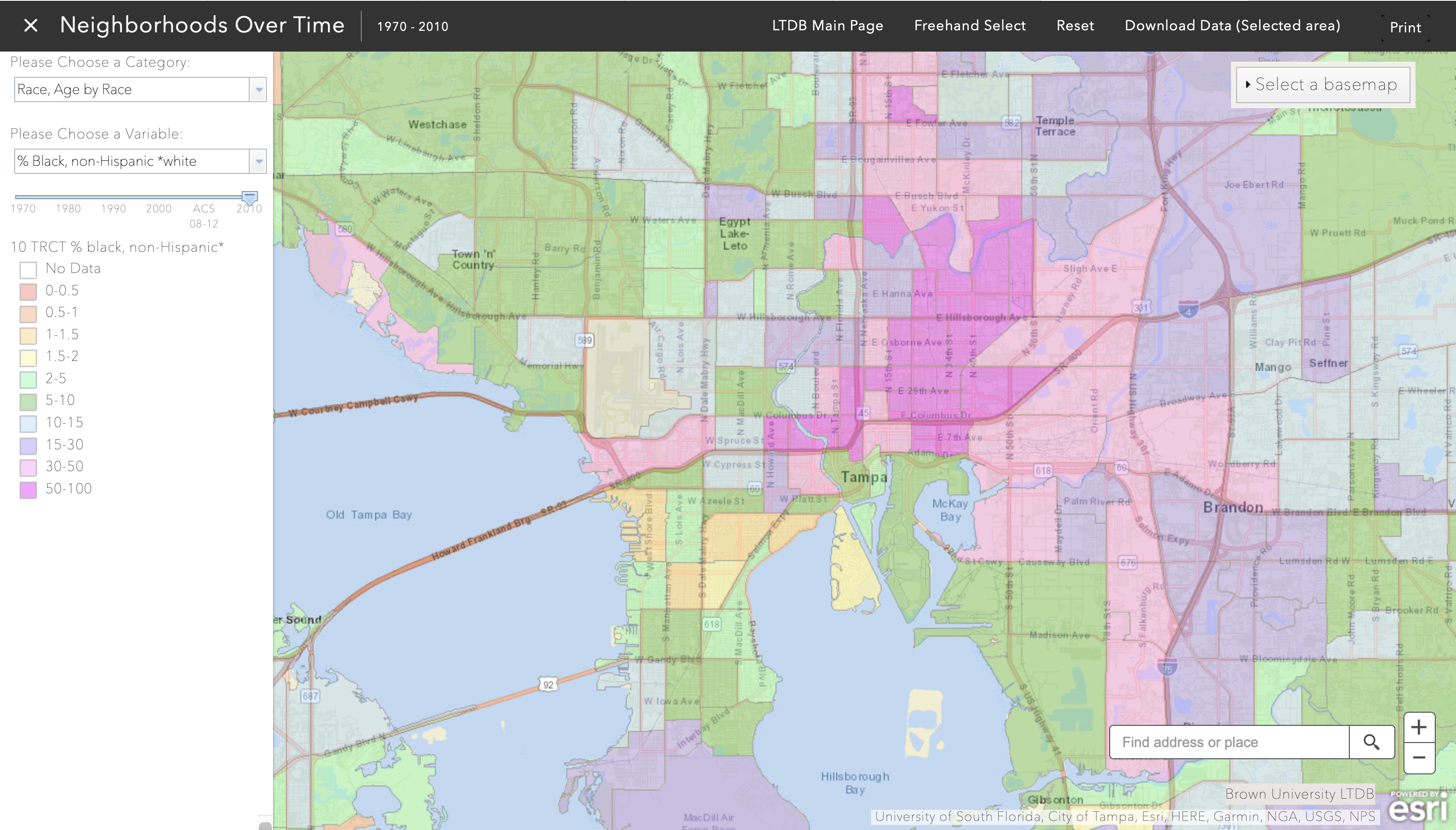
“The Longitudinal Tract Data Base (LTDB).” S4 Arcgis Map Web App Template, s4.ad.brown.edu/WebGISnew/webgisLTDB/. Accessed 25 Feb. 2025. 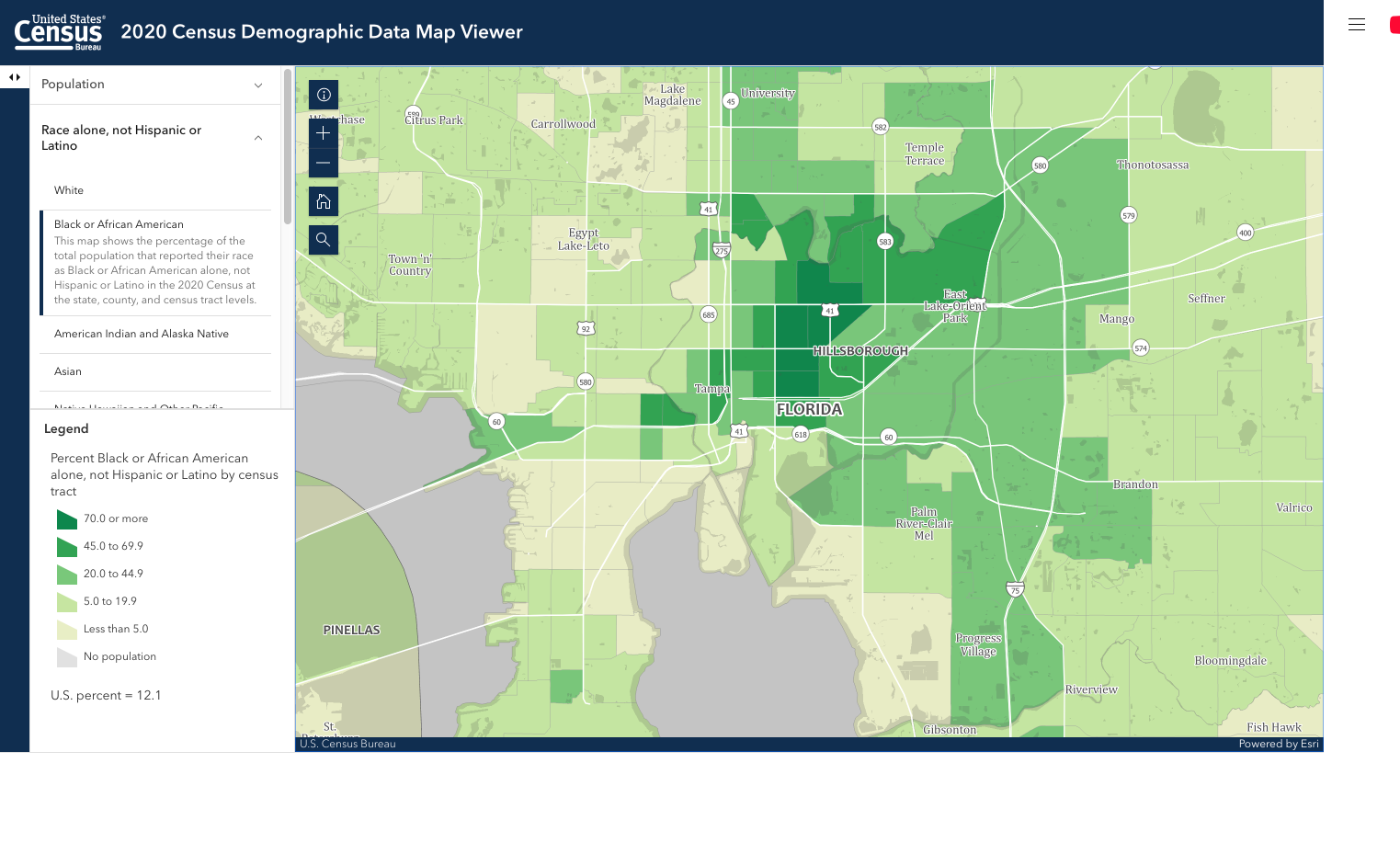
“The Longitudinal Tract Data Base (LTDB).” S4 Arcgis Map Web App Template, s4.ad.brown.edu/WebGISnew/webgisLTDB/. Accessed 25 Feb. 2025.
The difference in socioeconomic position and demographic composition of these neighborhoods compared to the rest of the city has remained relatively stable to the present day. The legacy of this history has manifested various detriments for generations of residents who have lived in these neighborhoods. This includes a prevalence of absentee landlords, speculative investors, abandoned houses, deteriorated conditions, and vacant real estate that detracts from residents’ property values, safety, and quality of life.
Fallout from the Great Recession
Tampa’s response to VAD property does not exist in a historical vacuum. Many Florida cities were hit hard by the 2008 financial crisis. Tampa’s political context helped shape its response. Here’s how we came to adopt the procedures in place today.
2003 – 2011: Mayor Pam Iorio
Mayor Iorio made the difficult decision to downsize the City of Tampa following the hit to Tampa’s tax revenue during the Mortgage Crisis and Great Recession. The spending cuts included the termination of City employees, increasing the workload for a limited staff.
2011 – 2019: Mayor Bob Buckhorn
A number of events tied to the growing issue of vacant, abandoned, and deteriorating property occurred during Mayor Buckhorn’s administration in the fallout of the Great Recession. A number of these occurred in 2013, including…
- An internal audit found mismanagement of the Clean City division, resulting in a merger with Code Enforcement to form the Neighborhood Enhancement division.
- A scandal arouse due to the deplorable conditions at property owned by the Chairman of Tampa Port Authority, bringing greater attention the issue.
- Mayor Buckhorn enacted a code enforcement crackdown, worked with Hillsborough County Circuit Court to create a docket to hear violations punishable by jail time, and allocated funding in the budget to hire more inspectors.
2011 – 2019: Tampa City Council
Tampa City Council also sought to address issues related to vacant, abandoned, and deteriorating property. They relied on reports from City staff and their own power of deliberation to form a final outcome. The fact that City Council’s did not work with an outside organization specializing in this policy domain at that time presents a missed opportunity. Given the significant complexity of the issues associated with VAD property, these meetings were tense, laborious, and confusing. Some of what City Council review at that time included…
- Neighborhood Involvement
- Squatting
- Abatement Cost
- Owners of Multiple Violating Properties
- Hardship Criteria
- Property Appraiser Collaboration
- Personnel
- Landlord and Tenant Notice
- Liens and Collection
- Rental Inspection (Rental Certificate Program revoked in 2023)
This culminated in a comprehensive update to Chapter 9 in Tampa’s code of ordinances relating to code enforcement procedures, which was passed in 2015.
Tell the power that be…
City Council members support the cause. But without cooperation from key players in the administration, progress will stall.
Let City Council know you’re on their side. Ask the Mayor for her staff to join us.
 Vacant to Vibrant